Let us look at some snapshots of the protest movements in our history:
Why did Raja Haji the legendary Bugis warrior mount a revolt against the Dutch, ending in his martyrdom atop a hill in Malacca? Why did Mat Kilau, the legendary warrior from Pekan Pahang act up against the British ending in his mysterious self-imposed exile and death by natural cause at the age of 122? Why did the Malay Nationalist Party, a continuation of Kesatuan Rakyat Indonesia Semenajung and an early radical Malay party in the late 1940s act up, only to be met with witch-hunts by the returning British?
Why did those fighting for Independence in the 1950s under the banner of Saberkas act up against the dying colonial British Empire, paving the way for the creation of what is now knows as United Malay National Organisation? Why did those truly multiracial group of social activists act up by organising the hartal against the British in the early 1960s only to be met with heavy- handed reaction? Why did those calling themselves the Malayan People’s Anti-Japanese Army revolt against the powers-that-be, end their persecution by the British that returned to power when the Allied Powers crushed the Axis Powers?
Why did the Malaysian intellectuals and social activists speak out over almost 20 years of the Kondrietiff cycle, beginning from May 13, 1969 to October 1989, to this moment in time to be met with the American McCarthy Era-type of response form the present government?
The answer lies in economics. Human existence, motivation, the rise and fall of nations has been attributed to economics. One's existence is defined by the material condition on is in or born into.
Question of power
Deeper than simple economics lies the question of power and the powerless, and the politics of under- representation. The Americans revolted against the British in the late 1770s under the banner ‘no taxation without representation’, symbolically registering their protest with the Boston Tea Party.
Essentially they revolted against intolerable laws set forth by the British - the 1765 Quartering Act and Stamp Act of 1765, Townshend Act 1967 and Coercive Acts 1774.
In our case, the answer lies in the ideology of Malaysia-style Oriental Despotism. The complex, dynamic, systematic, contradictory, sustaining, and consensual politics of the political-economy of a dependent communal-based capitalist state has made it possible for the use of the ISA to be rationalised and legitimised by arguments that touch merely on the symptoms of the breakdown of public order, rather that the root cause of the order in which the public need to be organised.
Had there been a sound developmentalist agenda from the onset of Independence - an agenda that retards the evolution of a corrupt corporate capitalist pluralist neo-feudalistic neo-colonialist capitalist state - we would have avoided or abandoned the use of the ISA and seen the evolution of a truly civil society that practises politics of inclusion.
To put it in simple words: we have made the wrong historical turn. We have to come back to where we began - back to the drawing board. This is the challenge - how do we undo hyper-modernisation and the politics of mistrust?
We are actually doomed as a nation. We need to get out of this quagmire if we are to save ourselves from total destruction in an age wherein the centre cannot hold, as the poet WB Yeats wrote.
How are we doomed? Why have we come to a point in which the ultimate keris - the ISA - is used to silence the voices asking the government to look into the plight of the oppressed and the desolate? Why is the voice of reason cast aside and force used instead? What might the consequence of this in an age of globalised, high speed, split-second information flow, consumption, and instantaneous revolution?
How do we evolve - or rise form the ashes of destruction brought about by internal contradictions that we have failed to resolve?
This nation needs to conduct soul-searching. Urgently.


Subscribe to:
Post Comments (Atom)
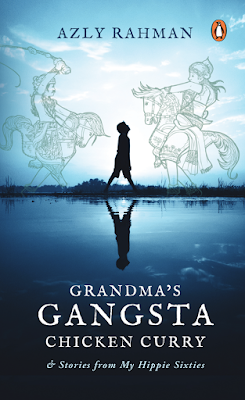
Grandma’s Gangsta Chicken Curry and Gangsta Stories from My Hippie Sixties by Azly Rahman
MY MEMOIR IS NOW AVAILABLE ON AMAZON! https://www.amazon.com/Grandmas-Gangsta-Chicken-Stories-Sixties-ebook/dp/B095SX3X26/ref=sr_1_1?dchild...
-
UPDATED INFORMATION: ON MRSM as 'SUCCESSFUL FAILURE': A QUESTION on ITS CONSTITUTIONALITY "was MARA's MRSM set-up un...
-
(2).jpg) A Malay view of 'Ketuanan Melayu' Azly Rahman | Feb 4, 08 2:51pm ‘O people! Your God...
A Malay view of 'Ketuanan Melayu' Azly Rahman | Feb 4, 08 2:51pm ‘O people! Your God... -
 by azly rahman it was the period of rock music whose influence came from down south, Singapore .. words reflecting the sociolect of t...

1 comment:
CHOOSE GOOD LAWS CAREFULLY
Whether we have a 'preventive' or 'curative' law
It must constantly be examined in case of any flaw
Since we don't want to simply drag anyone down on the floor
Any unfair and unjust elements must be kicked out of the door
(C) Samuel Goh Kim Eng - 041208
http://MotivationInMotion.blogspot.com
Thur. 4th Dec. 2008.
Post a Comment