Showing posts with label Malay Studies: Historical documents. Show all posts
Showing posts with label Malay Studies: Historical documents. Show all posts
Monday, January 04, 2010


Sunday, February 22, 2009
Tuesday, February 17, 2009
Thursday, December 11, 2008
How Hang Jebat murdered democracy by committing harakiri
RECHARACTERIZATION OF HIKAYAT HANG TUAH?:
A NEW READING
A NEW READING
Watching the video clip below on the death of Hang Jebat, I am now wondering who the real murderer of democracy is. Why did the "rebel" hand the "magical keris" Taming Sari, continue to fight, and yet knew that he was going to go down "with style"? Hang Tuah is already a historical "gone case"; a man projected as "moral and loyal" yet a creation of an author who is immoral and ideologically misguided.
The author of the Hikayat Hang Tuah wanted Jebat to give up democracy by committing physical and political suicide. The keris symbolizes the "tool of divine intervention" and used by the author to symbolize the power of the supernatural.
The ideology produced by the author is interesting; to cushion the fall of the corrupt Melakkan empire.
So, neither Hang Tuan is the hero, nor hang Jebat a rebel-warrior. The hero is the author who manipulated the direction of the flow of ideological consciousness of the Malays, up to this day. The Malays have taken a wrong "semiotic turn" in our understanding of Malay history.
Watch the video clip again, analyze the dialogue, and ask ourselves: what did the author of this Malay hikayat wish to propagate?
Wednesday, December 10, 2008
Two Malays fighting over a future ideological legacy
How might the British thinker Terry Eagleton analyze the scene and dialogue below?
EXCERPT FROM A PREVIOUS ESSAY...
"Who writes Malaysian history?"
The intelligentsia of the ruling class who had the means of producing history wrote Malaysian history. Marx was partly correct - the history of any nation is… the history of the ruling class. Those who owns the pen writes and as the hand writes, nothing is erased. The feudal Malay and Javanese kings had their court historians who produced historical ‘facts’ on batu bersurat (talking stones) on which ideologies were inscribed.
The Hindu kingdoms from antiquity had their Valmiki to write about the story of Prince Rama, and the blind poet Vyasa to narrate the history of the great war of Mahabharatha. The Japanese Shogunate had Lady Murasaki to write the ‘Genji Monogatari’ (The Tale of Genji), and the Malays had their Tun Sri Lanang to write about the glory of Malay feudalism. The British East India Company probably had a stable of historians, including Stamford Raffles who is said to have “founded Singapore” even though there were already natives living happily under tyrannical traditional rulers. Richard O Winstedt was certainly playing the quadro-hybrid role of historian-apologist-propagandist-Otherist of the dying British Empire.
The Malacca Sultanate too probably had a stable of oral and print historians who craft selected memories for the future generations so that the legacy of the Sultanate would continue; legacies that produce the signs, symbols, signification, and representation of feudalism that have neatly evolve into this cybernetic-neo-corporate-crony-capitalistic-feudalism which legitimises the sustaining of an economic order based on the feudal system of profits through patronage. Tun Sri Lanang was the quintessential historian-apologist-propagandist-Otherist of the dying Malacca Kingdom; one that succumbed to the might of the technologies of guns, guts and glory of the Portugese.
In Universiti Kebangsaan Malaysia (UKM), this court historian’s name is inscribed on its main library. ‘Naming’ is history’s political tool in which inscriptions become institutions that produce and reproduce ideologies. Revise everything If we wish to have a people’s history of Malaysia, we must do two things: rewrite history and teach our children multiple perspectives in historicising. After 50 years, the state of Israel is having a problem holding on to Zionist interpretation of history.
What is happening now is a continuing fallout of the dangers of selective historicising, especially when such as history is produced as a biblical truth, grounded in 2,000 years of ‘memory’ etched in passages of the Old Testament. After 200 years of American Independence, high school textbooks had to be constantly revised to accommodate newer interpretations of multi-culturalism; one that takes into consideration the contributions of groups, peoples, and nations that helped build America. The idea of inclusive historicising guides textbook writers to produce historical ‘facts’ that speak to the masses more than propagate post-colonial propaganda.
America was an ex-colony and a nation in which no group can claim the land as theirs. Perhaps this explained the popular slogan of post-9/11 America which consoles the nation as ‘Home of the Brave, Land of the Free’; a slogan that reminds Americans to be ‘patriotic’ (a foreign word in the American psyche). After almost 50 years of Merdeka and if we are to survive like the 200-year-old America, we must question authority, including ‘authoritative sources’ in history. The modern owners of the means of producing history lies in the ‘panel of experts’ whose consciousness that help them do history is limited to the dictates of the ideology of post-colonial Malaya.
The curriculum in textbooks and teaching manuals are not neutral artifacts; they are political tools for psycho-social reproduction. It must have been difficult for historians of Universiti Putra Malaysia, UKM or even Universiti Malaya to understand the wave of post-structuralism and counter-factual historicism as spectres that are haunting the way we ought to revise history. Old way of looking at events in history and propagating them as truths may no longer work with this generation of Malaysians that are tired of the lies their history teachers told them. The new generation of Malaysians want to read about the sufferings of the peasants under the Malay feudal lords; the dehumanisation of Indian rubber-tappers under the British colonialists; and the hardship of living in slums and dwellings in tin mines.
Subscribe to:
Posts (Atom)
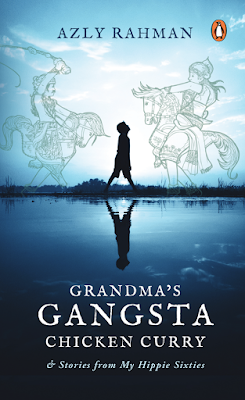
Grandma’s Gangsta Chicken Curry and Gangsta Stories from My Hippie Sixties by Azly Rahman
MY MEMOIR IS NOW AVAILABLE ON AMAZON! https://www.amazon.com/Grandmas-Gangsta-Chicken-Stories-Sixties-ebook/dp/B095SX3X26/ref=sr_1_1?dchild...
-
UPDATED INFORMATION: ON MRSM as 'SUCCESSFUL FAILURE': A QUESTION on ITS CONSTITUTIONALITY "was MARA's MRSM set-up un...
-
 A Malay view of 'Ketuanan Melayu' Azly Rahman | Feb 4, 08 2:51pm ‘O people! Your God...
-
 by azly rahman it was the period of rock music whose influence came from down south, Singapore .. words reflecting the sociolect of t...
